HausMoney — When the Workers Who Use It Do the Research
I was a restaurant employee and a HausMoney user before I was a researcher on this project. That insider position let me interview real users in real context — and send findings directly to the company. They shipped the changes.
Background
The Unique Position
HausMoney is a digital platform that lets restaurant and service workers receive and transfer tips through an app and optional debit card. When you're already using a tool every shift, you notice things that a researcher parachuting in for a usability session would never catch — the annoyance that builds over weeks, the workaround everyone uses but nobody talks about, the moment a coworker mutters something about their paycheck in the break room.
I was that person. And I had the skills to turn those observations into structured research.
Research Goal
To understand how restaurant workers actually experience HausMoney in practice — what works, what fails, and what would need to change for the product to feel reliable rather than stressful. The method was evaluative: the product already existed, and I needed to assess whether it was serving its users well.
Research Method
Contextual Interviews
I conducted seven qualitative interviews with coworkers who used HausMoney regularly. Because we shared a workplace and the same app, participants were candid in a way that formal research settings rarely produce. I wasn't an outside researcher — I was someone they trusted who was asking questions they already wanted to answer.
I asked about their full experience with the platform: how they received tips, whether they'd ever had a transfer fail, how they handled problems, and what they wished the app did differently. I captured direct quotes and identified recurring themes across participants.
Overall Finding
HausMoney is appreciated for the convenience of digital tip payouts — but users consistently described the experience as unreliable. The platform works when it works. When it doesn't, there's no safety net.
Key Findings
"One time, my payout took over two weeks. I struggled with money for that month."
"Tips can be delayed for days if coworkers don't clock in or out correctly."
"An AI would respond to my emails for weeks ... terrible experience."
"My card got declined for no reason, and I wish they would've notified me why."
"The only issue is not having a bank to call for questions or transaction problems."
"The app is very glitchy and lags in ways that most apps should not."
Recommendations
I organized findings into five opportunity areas and sent them directly to the HausMoney team as a research synthesis.
Build Trust
Transparent payout timelines with accurate dates. Clear push notifications for delays, declines, and issues — before users have to ask.
Improve Speed
Instant or next-day transfers with no added fees. Reduce maximum transfer time to under 2 business days as a baseline guarantee.
Modernize the App
Fix persistent glitches and slow loading. Add Face ID and smoother login. Surface customizable settings for repeat users.
Real Support
Replace automated-only responses with a human support channel. Improve first-response time — especially for payment failures.
Credit Card Reliability
Proactive decline notifications with explanation. A rewards or benefits layer to make adoption worthwhile beyond basic access.
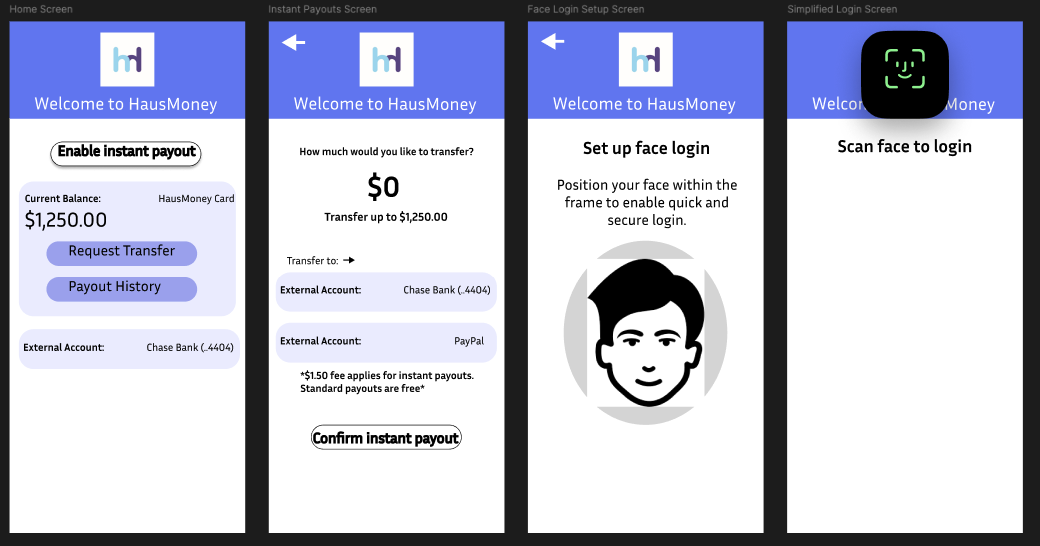
What Changed
After I sent the research synthesis to HausMoney, the team implemented three of the recommendations directly:
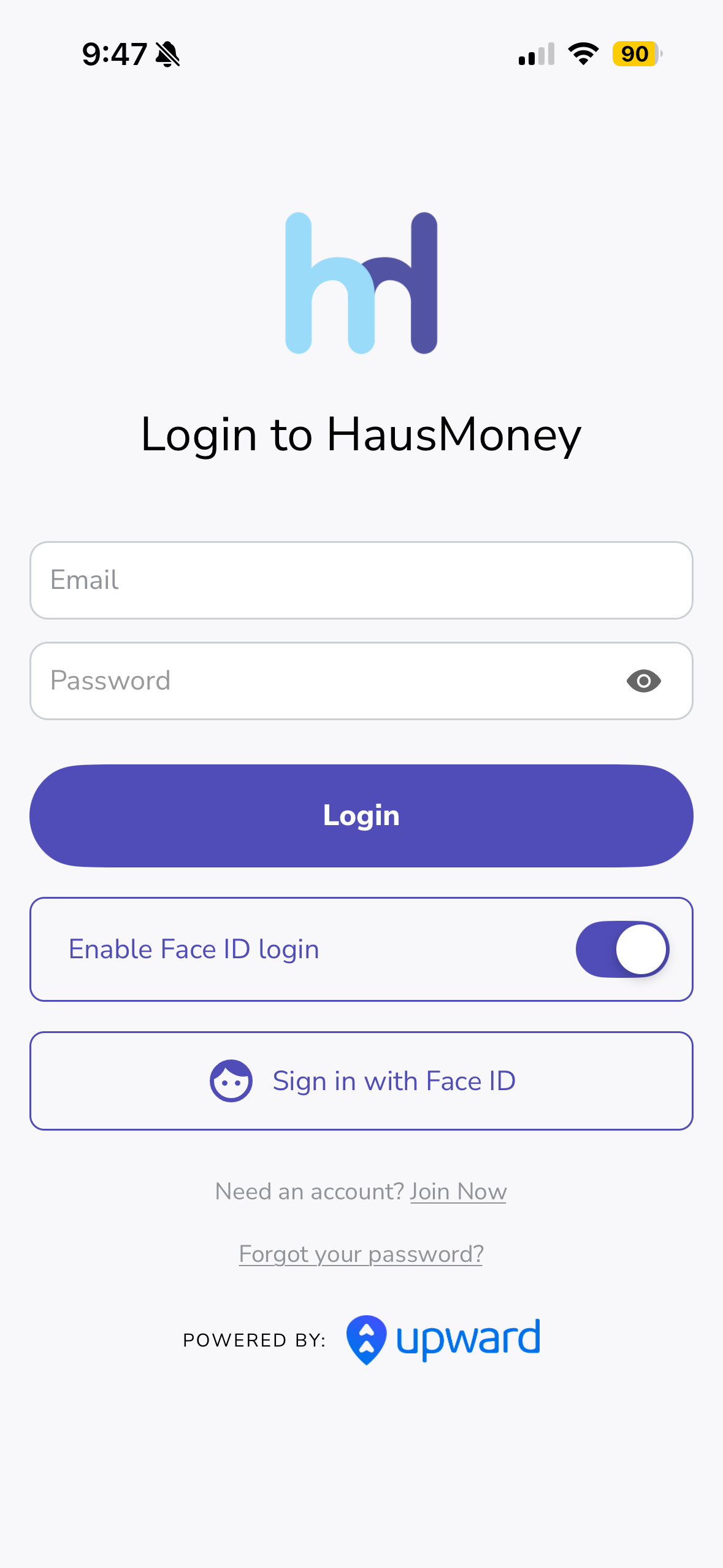
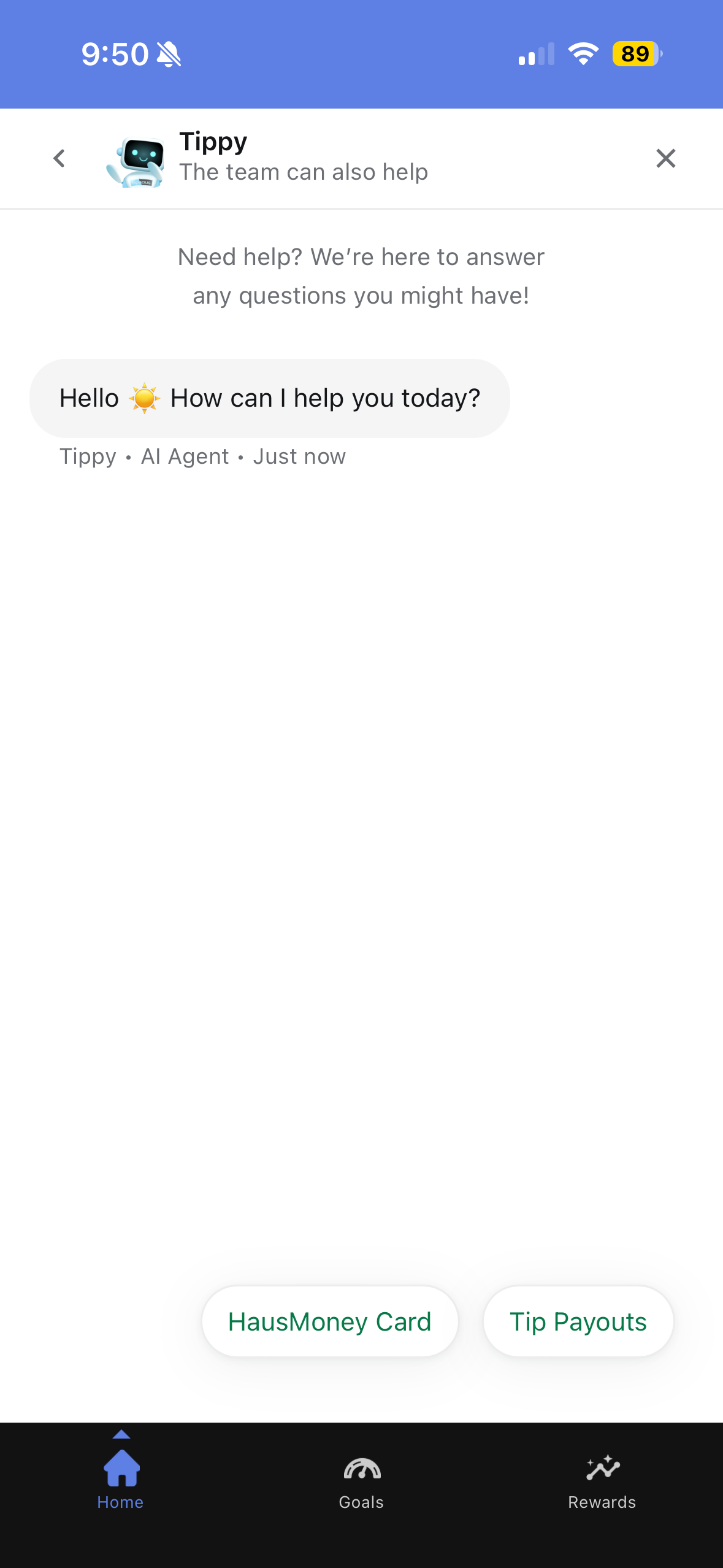
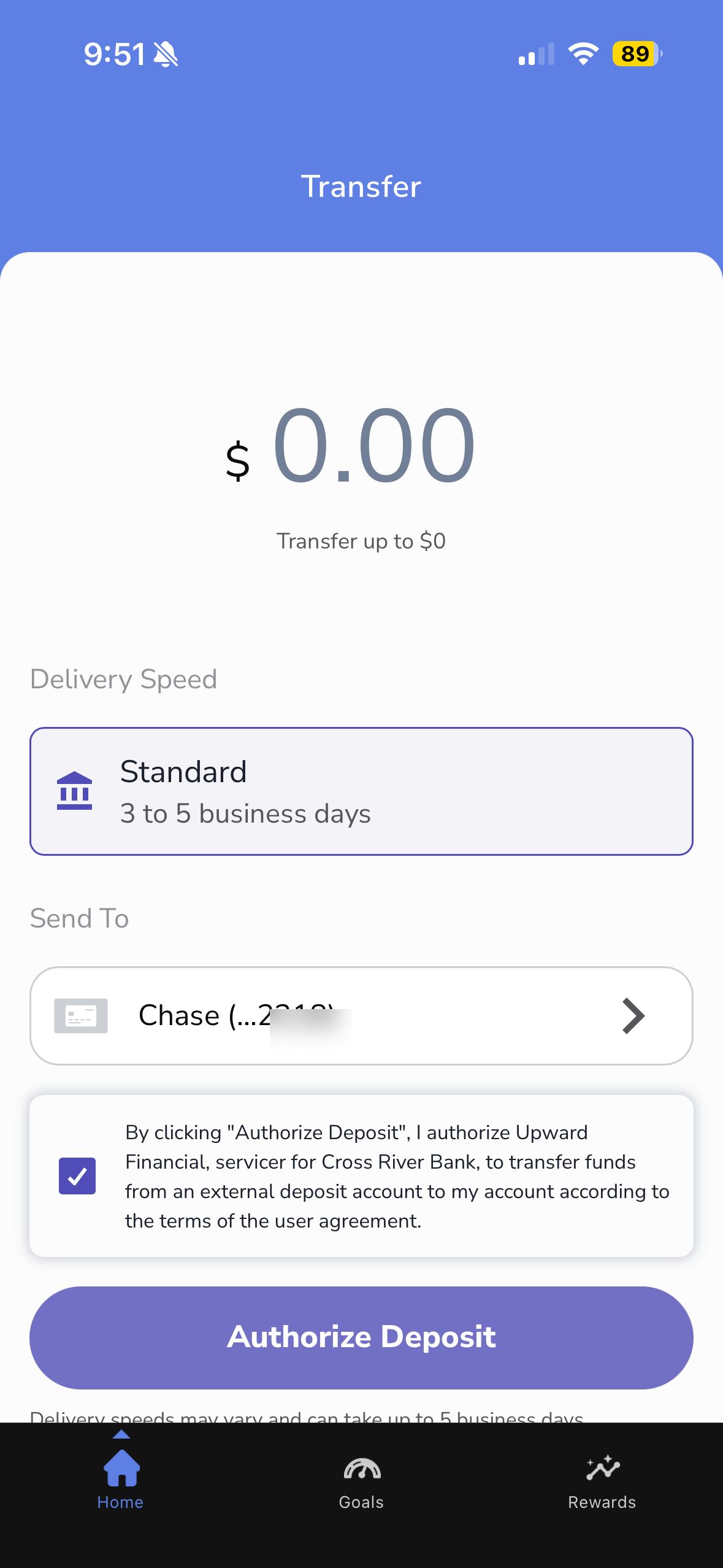
Having unsolicited research lead to actual product changes is rare. It happened here because the findings were grounded in real use, expressed in the users' own words, and framed around what the team needed to act on — not just what I had observed.
What I'd Do Differently
Seven qualitative interviews was enough to identify clear, recurring themes — but I couldn't quantify how widespread each issue was. With more time, I'd follow up with a short survey sent to a larger group of HausMoney users to measure how many experienced payout delays, support failures, or card declines. I'd also consider a diary study: asking participants to log their experience in real time over two or three pay cycles, capturing the frustration of a two-week delay as it happens rather than in retrospect. Finally, recruiting from multiple restaurant types and locations would help determine whether the pain points are universal or tied to specific workplace configurations.